
|
|
|
|
|
 |
|
|
U.S.
Society > Youth & Family Life |
|
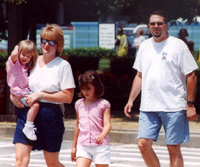
Belonging to a family is one bond almost everyone in the world shares, but family patterns vary from country to country. The United States has many different types of families, but the traditional structure of the American family -- mother, father and children -- continues to prevail for the most part as a new century unfolds. Yet, over the past several decades, US society has witnessed an evolution in family structure and daily life in many respects, because of myriad factors, running the gamut from advancements in science to the composition of the workplace. Single parenthood, adoptive households, step-parenting, stay-at-home fathers, grandparents raising children are but a few of the newer tiles in the mosaic. What
is it like to be a young person in the United States?
Thousands of young Americans volunteer to help take care of the elderly, the handicapped and hospital patients, or help clean up the environment. While for most American children and teenagers life today is nearly free of serious conflict, young people are still under many types of stress. Peer pressure, changing family conditions, mobility of families, unemployment and problems at school may lead to use of alcohol or drugs, the refusal to attend school, running away from home, teenage pregnancies or juvenile delinquency.
See also: |
||||
| Special Feature: | ||||
PBS Documentaries Looks at 'Generation Next"
The
42 million 16- to 25-year-olds in the United States -- roughly 14 percent
of the population -- will have a major impact on American society as
they rise into adulthood. In a series of profiles on NPR's Morning Edition
and PBS's NewsHour with Jim Lehrer, Judy Woodruff looks at what makes
Generation Next different from its predecessors.
American
Teenagers. eJournal July 2005 (America.gov)
Photo
Gallery: Rite of Passage |
||||
| Texts
are abridged from U.S. State Department IIP
publications and other U.S. government materials. |
||||



DISCLAIMER
Any reference obtained from this server to a specific commercial product, process, or service does not constitute or imply an endorsement by the United States Government of the product, process, or service, or its producer or provider. The views and opinions expressed in any referenced document do not necessarily state or reflect those of the United States Government. |
 U.S. Diplomatic Mission to Germany /Public Affairs/ Information Resource Centers Updated: September 2010 |